HEADLINE STEHT HIER
MBR Upgrade
Gravity Sand Filter Upgrade
Polymeric Membrane Replacement
Tertiary Upgrades
Testimonials
-
Ahmed A.Aziz Al-Saawy

Plant has been successfully started in December 2019. We received excellent technical support at site. The team of CERAFILTEC executed the installation, start-up, HMO process settings within 4 days.
-
LUTRALOG (Pty) Ltd
We are using CERAFILTEC's ceramic flat sheet membrane technology since Summer 2019. After a successful demonstration phase at several test sites, we decided in September 2019 to implement CERAFILTEC's technology for a local rehabilitation project for the first time. It was from the highest priority for us that we receive a very comprehensive support during the entire project execution to understand the technology in detail and to build and to operate the plant on the most efficient and safest way.
-
Enviro Control Private Limited
CERAFILTEC's scope includes basic engineering, design, drawings (typical P&ID, PFD, tank drawings, QAP) supply supervision over installation and commissioning assistance for their ceramic membrane system using ACFL technology with KMnO4 to remove color and odor together with Powder activated Carbon (PAC) and PFAS removal with PAC.
-
Cerafiltec

Lorem ipsum dolor sit amet, consetetur sadipscing elitr, sed diam nonumy eirmod tempor invidunt ut labore et dolore magna aliquyam erat, sed diam voluptua. At vero eos et accusam et justo duo dolores et ea rebum.
-
Cerafiltec
Lorem ipsum dolor sit amet, consetetur sadipscing elitr, sed diam nonumy eirmod tempor invidunt ut labore et dolore magna aliquyam erat, sed diam voluptua. At vero eos et accusam et justo duo dolores et ea rebum.
-
Cerafiltec
Lorem ipsum dolor sit amet, consetetur sadipscing elitr, sed diam nonumy eirmod tempor invidunt ut labore et dolore magna aliquyam erat, sed diam voluptua. At vero eos et accusam et justo duo dolores et ea rebum.
-
Cerafiltec
Lorem ipsum dolor sit amet, consetetur sadipscing elitr, sed diam nonumy eirmod tempor invidunt ut labore et dolore magna aliquyam erat, sed diam voluptua. At vero eos et accusam et justo duo dolores et ea rebum.
MBR Upgrade
Status Quo
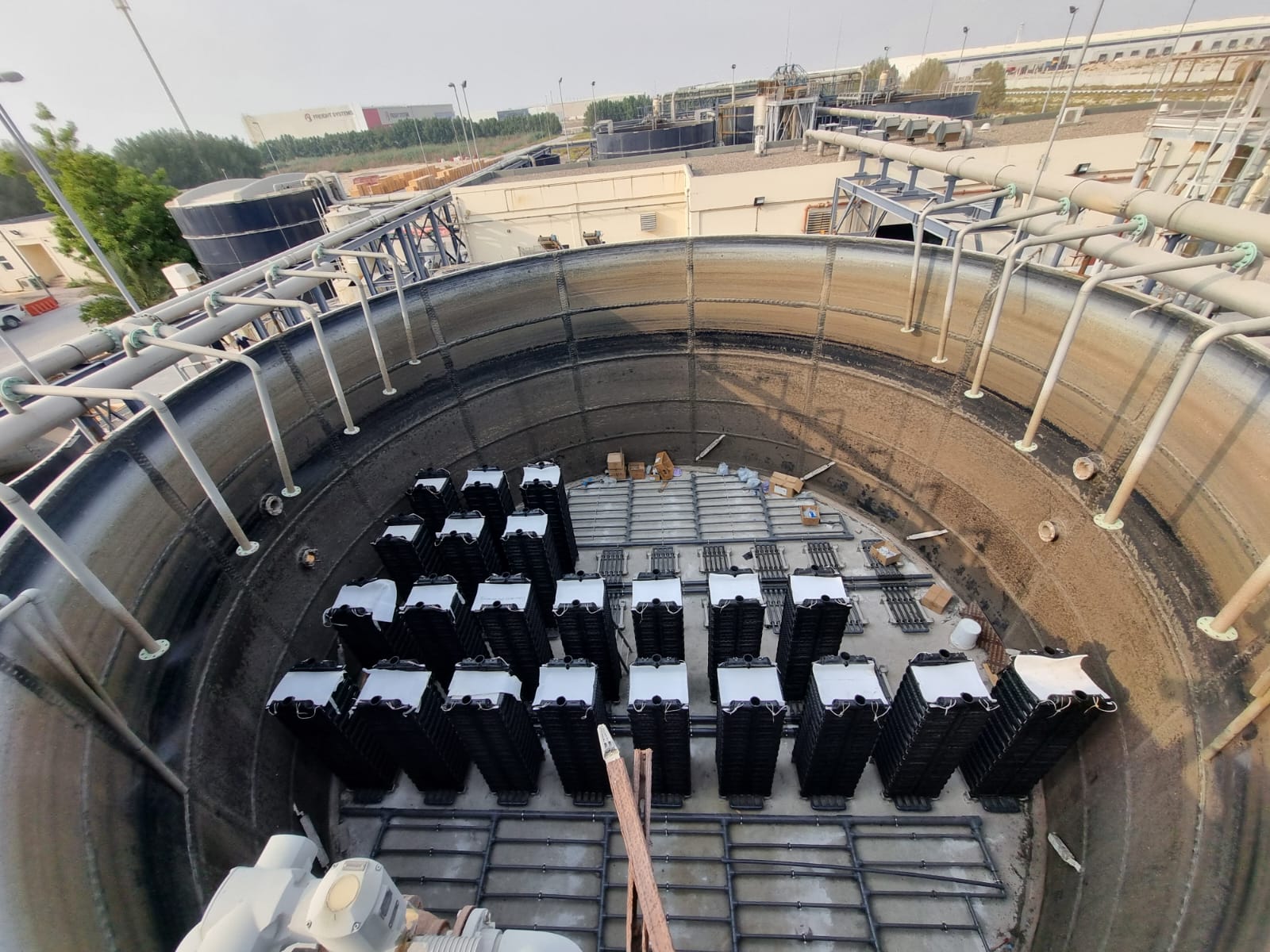
Traditional polymeric MBR solutions are susceptible to mechanical damage resulting in loss of filtration treatment capacity, particularly submerged flat sheet membranes. Hollow fiber membrane are limited to Chlorine exposure, can experience clogging and fouling when pretreatment either has issues or is bypassed, resulting in fiber breakage and reduction in capacity and effluent water quality.

Get a Quote
Durability
Ceramic membranes have a longer lifespan compared to polymeric membranes, resulting in lower replacement and maintenance costs over the lifetime of the MBR system. Their durability and resistance to chemical and physical degradation ensure consistent performance and reliability over time.
Chemical and Thermal Stability
Ceramic membranes are more resistant to harsh cleaning regimes without degrading.
High Mechanical Strength
Ceramic membranes are built to last and reduce the risk or breakages and maintainance downtime.
Constant Water Quality
Ceramic membranes provide superior filtration performance, effectively removing suspended solids, pathogens, and contaminants from wastewater. This results in treated water of higher quality, meeting stringent regulatory standards and improving downstream processes such as disinfection and reuse.
Polymeric Membrane Replacement
Status Quo
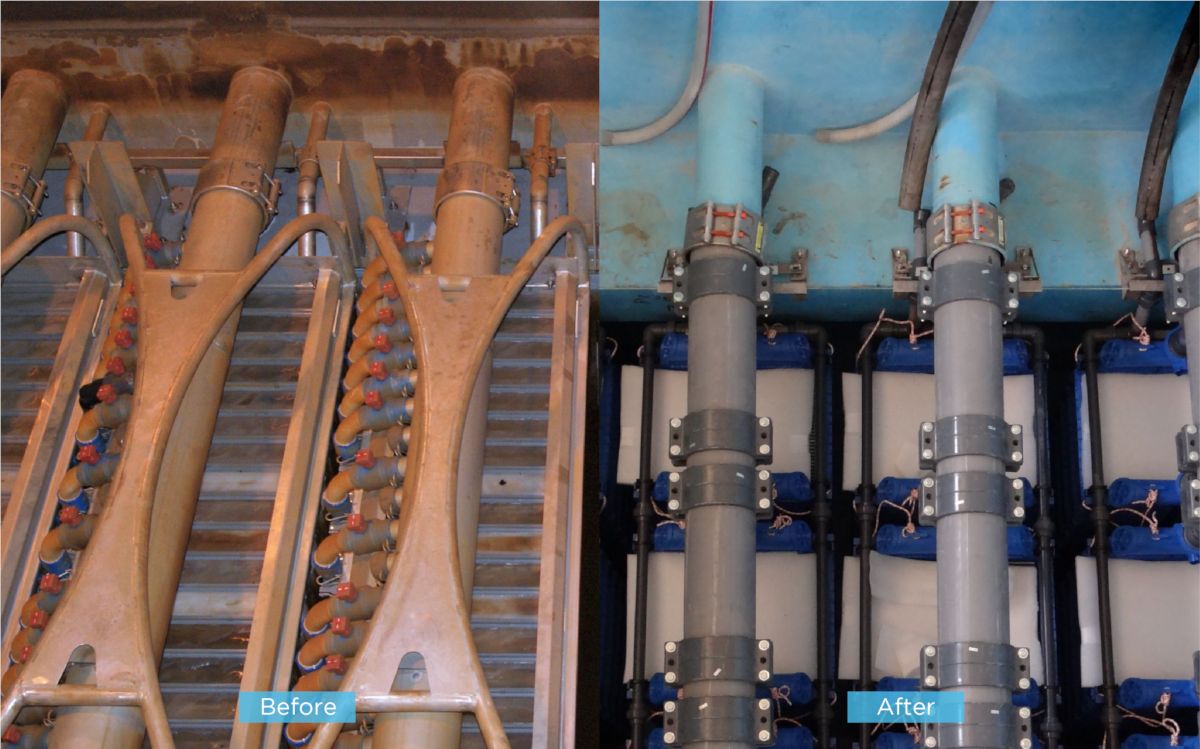
Polymeric filtration exhibit a high filter quality, but they are susceptible to mechanical damage, have limitations with chemical exposure and pH and can experience failures with variable or high solid feedwater conditions.
CERAFITLEC's solution
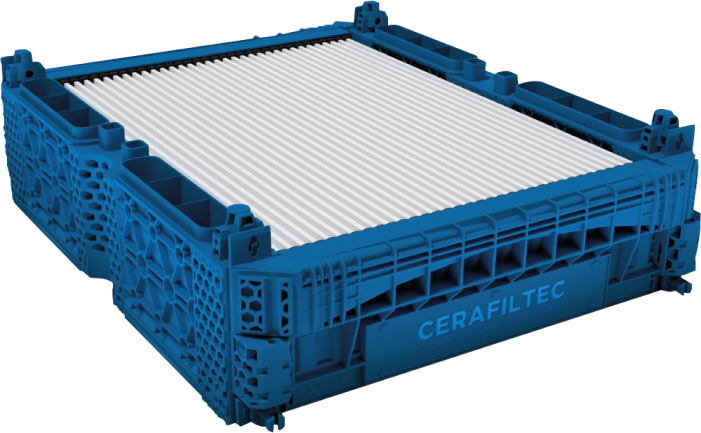
Due to the same dimensions of CERAFILTECs ceramic filtration modules, you can easily substitute existing polymeric filter cassettes.
Therefore, the systems can be exchanged with little effort and the advantages of ceramic flat membranes can be utilized optimally and cost-effectively.
Advantages
No chemical limitations
Direct and easy drop-in
Learn more
Durability and Longevity
Ceramic membranes are highly durable and resistant to harsh chemicals, high temperatures, and physical damage. They have a longer lifespan compared to polymeric membranes, resulting in reduced replacement and maintenance costs over time.
Resistance to Fouling
Ceramic membranes have a smoother surface and smaller pore sizes compared to polymeric membranes, making them more resistant to fouling by suspended solids, organic matter, and biological contaminants. This resistance to fouling leads to longer operational cycles, reduced downtime, and increased system reliability.
Higher Operating Temperatures
Ceramic membranes can withstand higher operating temperatures than polymeric membranes, making them suitable for applications where elevated temperatures are present, such as industrial wastewater treatment, oil and gas processing, and food and beverage production.
Chemical Compatibility:
Ceramic membranes are chemically inert and compatible with a wide range of aggressive chemicals and disinfectants, making them suitable for treating challenging wastewater streams containing corrosive or abrasive substances.
Narrower Pore Size Distribution
Ceramic membranes offer precise pore size control and a narrower pore size distribution compared to polymeric membranes. This allows for more efficient removal of contaminants and pathogens from water, resulting in higher-quality treated water.
High Flux Rates
Ceramic membranes typically have higher permeability and flux rates compared to polymeric membranes, allowing for greater throughput of treated water and smaller footprint requirements in water treatment systems.
Environmental Sustainability
Ceramic membranes are eco-friendly and recyclable, contributing to the overall sustainability of water treatment processes. Their longer lifespan and reduced maintenance requirements result in lower resource consumption and environmental impact compared to polymeric membranes.
Performance in Harsh Conditions
Ceramic membranes maintain their filtration performance in challenging operating conditions, including high pH, high salinity, and abrasive environments, where polymeric membranes may degrade or become less efficient.